EN
EN
 DE
DE
 SK
SK
 PL
PL
In this industry, the margin for error practically does not exist. Short shelf lives of raw materials, strict sanitary standards, and deliveries in the Just-in-Time model mean that a planning mistake can be extremely costly. One absent employee or a packaging machine failure can turn a valuable product into a loss in a matter of hours, and result in substantial penalties for missed deliveries.
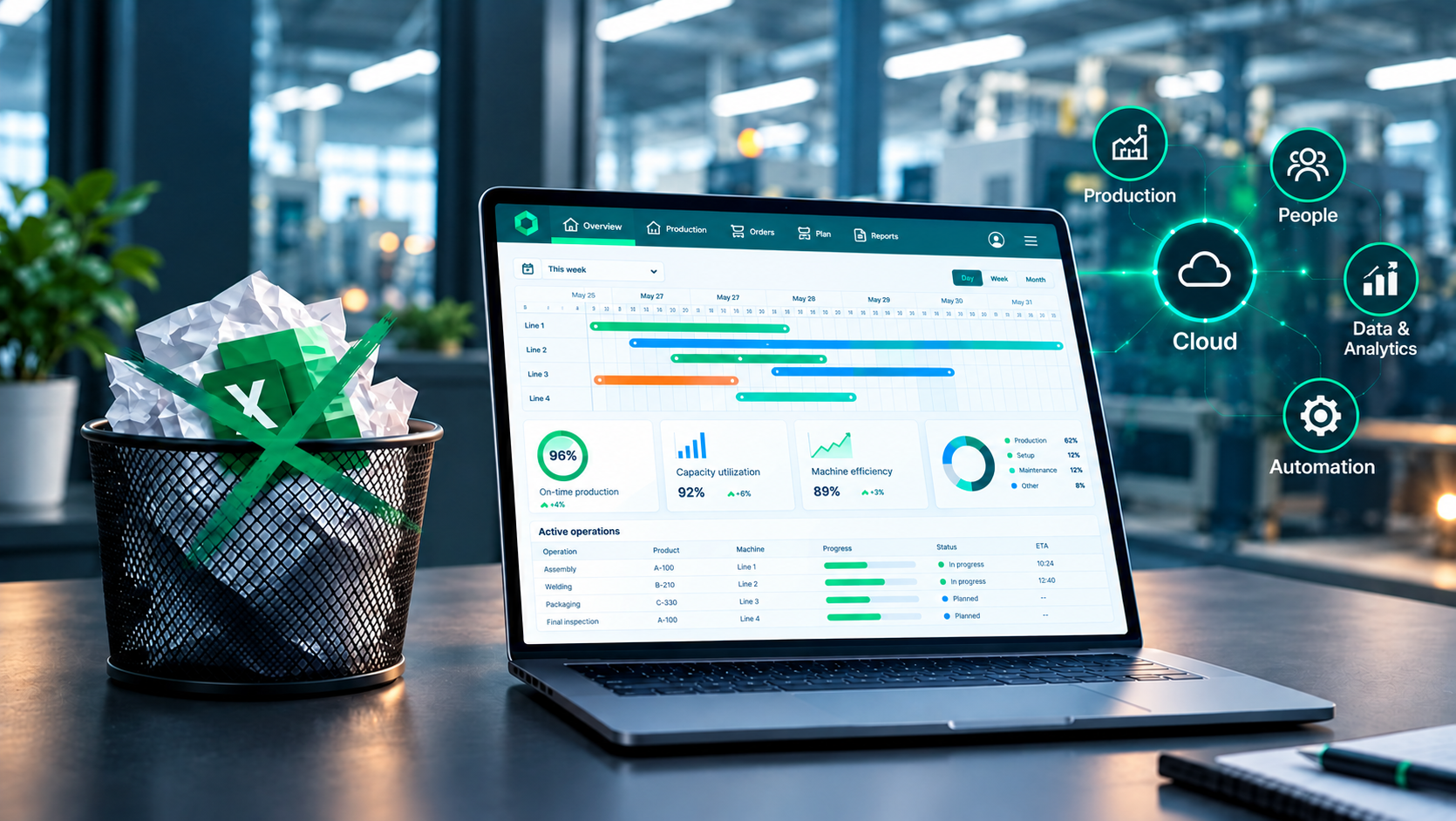
Despite this, the revolution has still not arrived in the offices of many Polish food plants. At the heart of production planning is still the good old Excel spreadsheet. This tool, although widespread, is unable to respond automatically to unexpected breakdowns or sudden spikes in orders. On the other hand, large enterprise systems deter smaller companies with high costs and lengthy, complex implementations.
GOMAN offers another approach. The GOMAN system – a cloud-based, lightweight web platform – proves that advanced algorithms can be delivered through a simple, intuitive interface. The tool was created so that smaller players could address bottlenecks quickly and compete confidently with larger market players.
People and equipment under full control in one place
GOMAN abandons a complicated structure in favor of modular flexibility. In food processing, processes such as pasteurization or bottling must run without disruption. The system allows creating a unique plan for every single order, making it easier to meet tight deadlines.
The key is connecting machine availability with employee schedules. The HR module allows scheduling shifts in close connection with the factory plan. In practice, this means an end to situations where a line stops because a person with the appropriate qualifications or valid health certificates was missing on the shift. If an employee reports a sudden absence, the manager can immediately modify the schedule directly in the browser.
Equally important is the optimization of machinery use. With frequent changes in the product assortment, a key challenge is reducing the downtime needed for cleaning and line changeovers. The system helps improve machine utilization and reduce operating costs.
From visibility to action: keeping production one step ahead
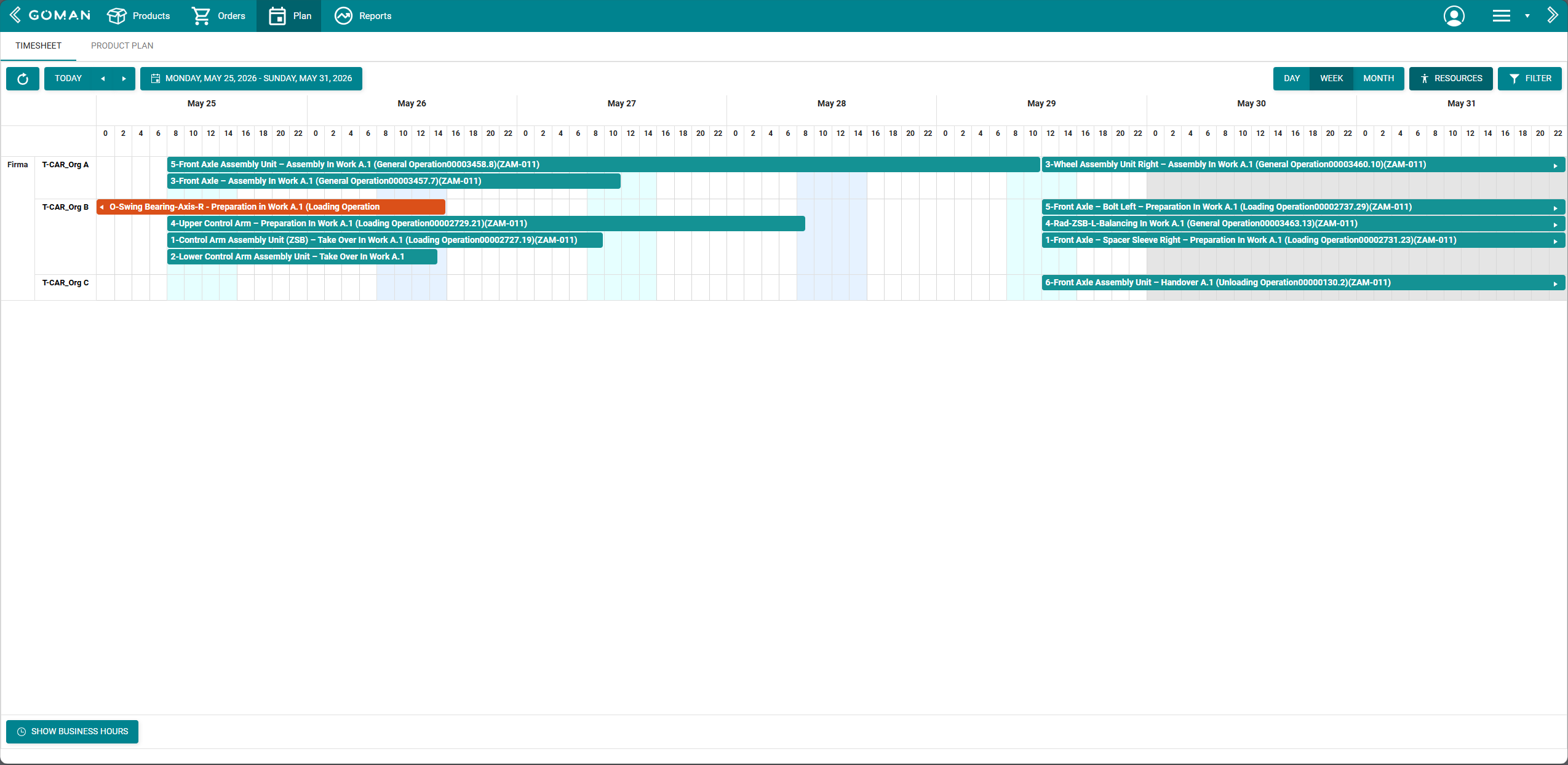
Time flows faster in the food industry, which is why GOMAN focuses on clear, visual control over the factory. Thanks to interactive timelines, Gantt chart visualizations, and transparent dashboards, management has a clear, real-time overview of the situation. This makes it possible to identify potential bottlenecks before they result in delivery delays.
But visibility is only the beginning. GOMAN turns production data into timely action by making schedules and processes easy to adjust as conditions change. When a deviation, bottleneck, or unexpected interruption occurs, users are notified in time to take action. Instead of discovering a problem when it is already affecting production, they can respond early, resolve the issue, and keep the process moving. In this way, GOMAN helps transform real-time information into faster decisions, smoother operations, and greater control over the entire production process.
A flexible approach to production planning
GOMAN is an open and flexible software platform, designed to adapt to the specific needs of each customer rather than forcing every factory into a predefined planning model. The core principle is simple: the production plan should meet delivery deadlines while minimizing unnecessary downtime and maintaining appropriate machine utilization.
This flexible foundation allows GOMAN to go further than standard planning software. Once the key production objectives are defined, additional requirements and parameters can be incorporated into the planning logic to reflect the unique processes, priorities, and constraints of a particular plant. In practice, this means that the system grows together with the customer – instead of changing the customer's way of working to fit the software.
Cloud instead of costly local infrastructure
For many medium-sized plants, digital readiness and implementation costs can be barriers to adopting new software. GOMAN bypasses these obstacles. A simple interface means the crew does not need weeks of training, and the system can be easily integrated with ERP programs or time and attendance (T&A) systems already running in the company.
From the perspective of financial directors, the distinction between CapEx and OpEx is important. Thanks to the cloud architecture, the company does not have to invest hundreds of thousands in physical servers (CapEx). The IT cost becomes a predictable operational expense (OpEx) in the form of a subscription. For enterprises that prefer to keep data on-site for security reasons, an on-premises version is also available (on-premise).
How to choose a system for a slaughterhouse or dairy: three key criteria
Facing the choice of production management software, managers should consider three criteria:
- GOMAN is an agile, easy-to-use system for companies that need quick results and clear visualization, without the need to implement heavy, corporate platforms.
- Switching to a subscription model (SaaS) helps preserve cash flow and avoids tying up capital at the outset.
- As artificial intelligence (AI) and digital twins become more common, smaller, flexible systems tailored to specific industries may be a practical option for SMEs.
Try GOMAN in practice
Polish processors who want to abandon manual planning in Excel can test the GOMAN system free of charge after an initial demonstration and agreement on the trial setup. The trial version allows importing your own data and checking how the algorithms cope with the real challenges of the factory. This gives companies the opportunity to evaluate the system in their own production environment before making a final decision. Technical details and trial conditions are available after submitting an inquiry through goman.sk.